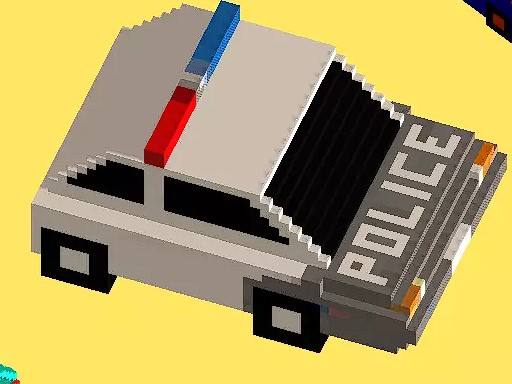
A deliberate first-run routine for a racing game that assigns different jobs to sideways and upward swipes.
A gesture has a job
Fast And Crashy supplies a particularly useful distinction: left and right swipes change lanes, while an upward swipe accelerates. Those gestures solve different problems. A lane change responds to where traffic is; acceleration changes how quickly a situation develops. Treating both as interchangeable attempts to escape trouble can make it difficult to understand why a run ended.
Begin by learning the sideways gesture without adding extra acceleration whenever the game allows that choice. Watch whether one swipe produces one lane change, how the change looks and when the vehicle is clearly established in its new position. These observations come before any claim about the best lane or ideal speed. The listing supplies neither a traffic pattern nor a tested safe route.
Look beyond the nearest car
Once the lane response is understandable, compare the space ahead in the current lane with the space in the lane you are considering. A neighboring lane can look clear beside your vehicle while holding an obstacle farther up the screen. Looking at both the immediate gap and the next visible gap makes a lane choice a more deliberate decision.
This is an optional attention routine rather than a promise that a gap will remain open. The game may change the situation while you move. Avoid adding a second swipe simply because the first felt uncertain; first observe the result when there is time. If the input behaves differently on a particular device, use the actual response as your reference instead of assuming that a longer or faster swipe has a specific hidden effect.
Add speed with a reason
Acceleration can become a separate learning step. Choose a moment when you understand the visible traffic well enough to notice what the upward swipe changes. Ask whether the time available for your next decision feels different and whether your lane-change timing still makes sense. Do not assume the description's question about speed establishes a measured top-speed target or a scoring formula.
After a collision or failed run, identify the decision immediately before it. Were you reacting to the closest vehicle, moving toward a gap you had not checked, or accelerating while still learning the lane input? Pick one of those questions for the next attempt. A run with fewer simultaneous changes may reveal more than a frantic effort to recover at every moment. The objective of this routine is clearer control over your own choices, with the game's actual score and progression left to its visible rules.